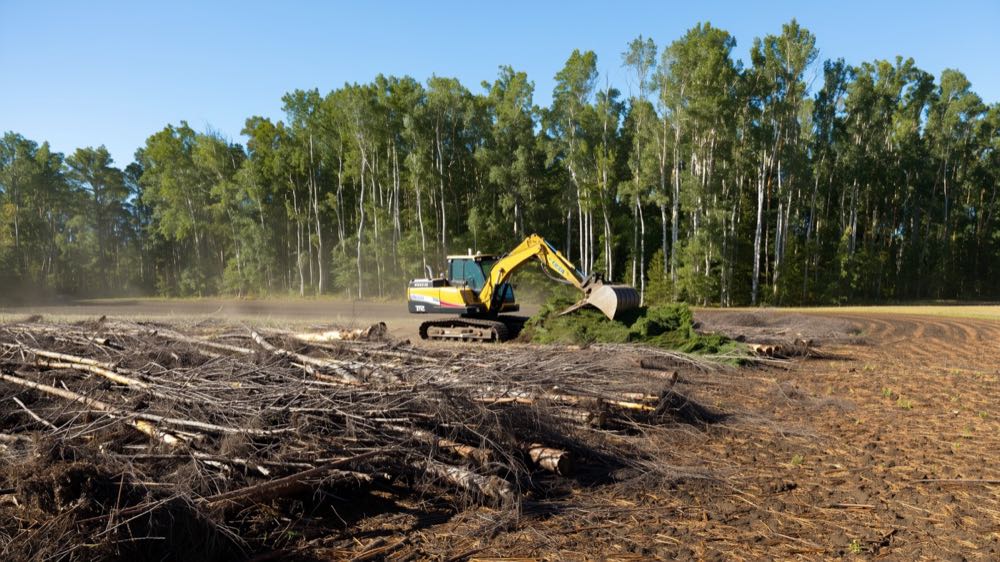
An acre of privet, sweetgum saplings and pine volunteers turns into a wall in three Georgia summers. Clearing jobs run from opening a fence row so the fence crew can get through, to stripping a wooded lot to bare dirt before a build, to pushing back a pasture edge or a pond bank.
Saws and a chipper handle the small jobs; a skid steer with a mulching head comes out for the big ones. Stumps can be ground or left, and the debris is chipped on site, piled for burning where allowed, or hauled.
What a lot and land clearing job involves
- Fence line and property line clearing
- Clearing the footprint for a new house, garage or pool
- Overgrown lot and privet removal
- Picking out the trees worth keeping and clearing everything around them
- Debris chipped, piled or hauled
What's included
- A walk of the boundaries before the estimate is written
- Machine time, fuel and the crew for the days quoted
- Good trees flagged with you and left standing
- Disposal by the method agreed: mulched, piled or hauled
- The lot left passable for the next contractor
Quoted separately
- Stump grinding on larger lots, quoted per stump
- Grading, fill or erosion control after clearing
- Permits, which stay in the owner's name
Clearing around Macon
Most clearing calls come from outside the city line: lots in Lizella and Bolingbroke, the Jones County side toward Gray, and the ground between Macon and Warner Robins where subdivisions keep pushing into pine woods. Three Georgia summers turn an unmown edge into a wall of privet, sweetgum saplings and volunteer pines, and by the fourth year the saplings are trees.
The soil sets the method. Sandy ground on the Coastal Plain side takes a skid steer with a mulching head without rutting; red clay after rain does not, so the crew waits for it to dry or works the edge with saws and a chipper. Big pines are felled and bucked; hardwood stumps are ground or left, whichever the plan for the lot calls for.
Before the first cut, two questions: is any of the lot in a floodplain or a historic overlay, and does the county want a permit for the size of the clearing. Macon-Bibb Planning and Zoning answers both for Bibb County; Jones, Monroe and Houston counties have their own offices. The crew walks through this with you on the estimate visit, and piled debris is burned only where it is allowed and permitted.
Lot and Land Clearing pricing in Macon
Lot clearing is priced per acre, typically $1,500 to $5,000, set by how dense the growth is, how big the trees are and where the debris goes. A fence line or a pasture edge is quoted by the length; a building site is quoted as a job after a walk of the boundaries. The estimate is written and comes before any machine is delivered.
Mulching in place is the cheapest disposal and hauling the most expensive, and leaving stumps saves the grinding. Keeping the good trees costs a little more in time and saves a lot in shade.
Full price list and what moves the price →
Related: Tree Permits, Storm Cleanup and Debris Rules in Macon, Tree service in Gray, Tree service in Forsyth. Official page: Macon-Bibb County Planning & Zoning.
Lot and Land Clearing questions, answered
How much does it cost to clear an acre of land in Macon?
Typically $1,500 to $5,000 per acre. Light brush and privet that a mulcher can chew through in a day sits at the low end; a wooded acre with mature pines that have to be felled, bucked and hauled, with stumps ground, sits at the top. Half-acre building sites are quoted as a job rather than by the acre.
Do I need a permit to clear land in Bibb County?
It depends on where the lot is and how much is being cleared. Ground in a floodplain, a historic overlay or near a stream can need review, and a larger clearing may need a land-disturbance permit. Macon-Bibb Planning and Zoning is the office to ask, and the crew checks with you on the estimate visit before quoting.
What happens to the brush and stumps?
Three options, priced differently: mulched in place with the skid steer and left as ground cover, chipped and piled for you to use or burn where the county allows it, or hauled away. Stumps are ground below grade if the lot is going to be built on or mowed, and left if it is going back to pasture or woods.